
Portia White: A Celebration of her Life and Legacy
April 11, 2022
Over many months of thoughtful planning, our students have been actively engaged in learning about Portia White and her cultural impact as a Canadian legend, international musical star and breaker of racial barriers. We will unveil a plaque in her honour as part of a larger student-led commemorative ceremony, with some very special guest speakers and performers. It is indeed an exciting and significant moment as we come together to pay her this richly deserved tribute and students will be dedicating time in class to view the ceremony.
It is our hope that Portia’s reputation, as the first Black Canadian concert singer to achieve international renown, will be buoyed by the installation of this memorial. It will stand in its honoured place as a testament to her achievements both on and off the stage, and in recognition of the impact she has had on Branksome Hall as a beloved voice and music teacher.
To view the ceremony, which took place on Monday, April 11, 2022, please see the video below.
Portia's Legacy Remembered
It is a testament to the avant-garde pedagogy and the visionary commitment to social justice that Branksome Hall responded so readily and cheerfully to my pipe-dream that there could be--
should be--a plaque erected here to represent Canada's first internal Black star of stage and hall. Branksome Hall has seized upon this opportunity to explore and advocate for Black Excellence within its own precincts, and all of its students and faculty have engaged with this idea of honouring Portia White with gusto and incredible imagination. As Portia White's great nephew, I am thrilled to see the plaque dream come to fruition, so that Portia White's name, already integral to the history of Branksome Hall, is now inscribed on its very hallowed premises.
Dr. George Elliott Clarke Portia White
This is an opportune and important moment, with our ongoing strategic focus on diversity, equity and inclusion, to showcase the significance Branksome Hall and Principal Edith Read played in Portia White’s life and career while we study our history and celebrate Black excellence within the student curriculum and broader community.
Former Principal Karen L. Jurjevich
It's my great pleasure to contribute to this celebration of a Canadian musical pioneer, for whom wider name-recognition is long overdue, as we heighten her profile and honour her place, her voice and her legacy as a groundbreaking force on the world's concert stage.
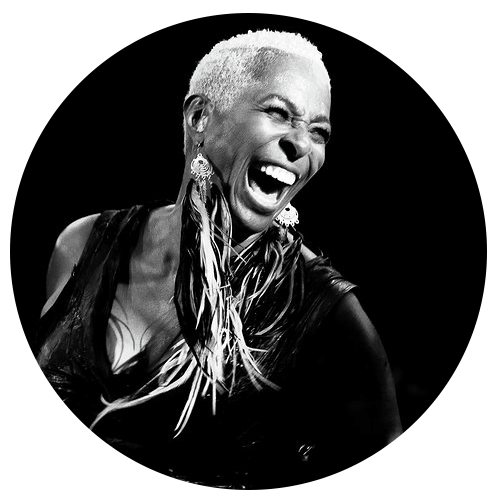
Measha Brueggergosman-Lee
Meet our Special Performers & Speakers




Portia White Plaque
Portia White Celebration collaborator, author, poet and professor, and Portia’s great-nephew. (Plaque will be unveiled on Monday, April 11 in front of Portia White's family.)
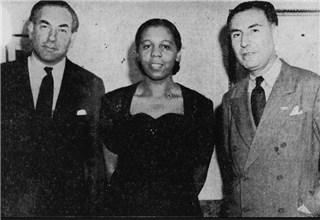
Named after a Shakespearean heroine, Portia May White seemed destined for the stage, a venue she would conquer as a contralto of soul-stirring coloratura. Born in Truro, Nova Scotia on June 24, 1911, White was the granddaughter of Virginian ex-slaves, and the daughter of the first Black officer (non-commissioned) in the British Army, Rev. Capt. Dr. William Andrew White (1874-1936).
She earned much applause for her bravura choir vocals in her father’s church, and then wowed Halifax music lovers with mezzo-soprano solos that thrice won her the Helen Campbell Kennedy Cup (1935, 1937, 1938), the highest honour at the Halifax Music Festival. However, White’s income as a segregated school teacher was too paltry for her to aspire to world-class vocal training. Fortunately, a Jewish refugee from Mussolini’s Italy, a classical baritone and medical doctor, Ernesto Vinci, became White’s teacher, while the Halifax Ladies’ Musical Club covered her tuition.
Soon, White was as prominent a Nova Scotian symbol as the Bluenose racing schooner. But how could she gain the world’s attention?
Enter Dr. Edith Read, Principal of Branksome Hall, who, impressed by White’s talent, arranged her debut concerts in Toronto in 1941, and New York City in 1944 and 1945. Critics could not believe their ears! Interpreting European classical pieces, Canadian folk songs and African-American spirituals, White’s bel canto descanting left audiences tearful and joyful, and had reviewers ransacking glossaries for superlatives.
White’s stardom saw her tour North America widely and also Panamá, Colombia, Curaçao, Barbados, Jamaica, Grenada and Ecuador (where she sang above the clouds in the Andes). She spent much of 1946 in the Caribbean and Central and South America.
Sadly, throat problems curtailed White’s concert career. She withdrew from the stage in 1952 to teach voice and music at Branksome Hall. Her private pupils numbered such luminaries as Lorne Greene, Dinah Christie and Don Francks. In 1964, she accepted a Command Performance—to enthrall Queen Elizabeth II.
White died of cancer in Toronto on February 13, 1968. Her legacy endures.
As Canada’s first Black singer of international renown, Portia White represents Black excellence, fostered in part by her association with Branksome Hall.
In 2019, Sheila White, Portia’s niece, curated the Portia White Exhibit to mark the 50th anniversary of her passing, on February 13, 1968, with the Don Heights Unitarian Congregation and the White family. Artifacts had been carefully preserved by family archivist, Vivian White, Portia's sister-in-law, to form a display to celebrate White’s life. Listen to audio clips here.
Photo: 1944 tour