
A Garden Needs a Soul
Published On:
An Interview with Branksome Hall alum, author and landscape designer Lindsey TAYLOR’86.

Lindsey TAYLOR’86, the founder of Lindsey Taylor Design, creates gardens and landscapes for public and private clients throughout the Northeastern United States. After co-founding The Evergreen Foundation Canada, she began working as a contributor and editor at a number of publications. For nearly a decade, she produced, wrote and styled The Wall Street Journal’s well-loved "Flower School" column, which then became a beautiful book titled Art in Flower.
Today, Lindsey is joining us to share her path after graduating from Branksome and to help alums think ahead to their spring and summer gardening.
Can you tell us about your time at Branksome Hall? Is there a memory or a particular teacher or class or club that you think impacted your path after high school?
I made wonderful friends who are still some of my closest and dearest today.
I had a great teacher from South Africa, Ms. Weinstock. I felt very inspired and did my best work in her class. I recall her pushing us to think in a more creative way and look at the world at large. I remember I did a presentation to the class on the artist Christo titled, “What is Art?” that I was particularly proud of.

We’d love to hear more about your path after Branksome Hall. What led you to landscape design?
I have had a somewhat unconventional route to becoming a garden designer.
Nature, floral design, art and gardens were always interests of mine. But it was on an eight-month trip through Asia and the Middle East after university, where I believe a deeper passion for landscape design ignited in me. I decided after Japan, our first stop, that on my return I would pursue a master’s degree in Landscape Architecture. However, when I got back, I ended up putting that idea on hold and began brainstorming with Geoff Cape on an idea that would become known as The Evergreen Foundation. I worked collaboratively with so many landscape architects, urban planners, horticulturalists and environmentalists during that time. I was learning a lot!
When I moved to New York City in 1996, I was fortunate to land a job in the newly formed Garden Department at Martha Stewart Living magazine. I was again in a job that exposed me to many talented people, in gardens, art, design and more. After a long career in magazines, I slowly started to develop a private garden design practice which I'm still very actively doing today.
Can you tell us about your approach to garden design and horticulture?
I believe in responding to the site and architecture first. I think about what will feel right for the location. I connect to the place and consider, “What makes sense for the land and the people living here? What type of design will have as minimal impact as possible on the environment?”
I like to start with "good bones.” In other words, good hardscape and geometry. I love working with stone.
I believe that the design of a garden should come first, then you fill in with the plants. It's very helpful to know plants for this stage. I spent many years taking classes at the New York Botanical Gardens School of Horticulture. I read all the catalogues, I went to nurseries and met growers. It's just like an artist needs to know their paints and tools. Without that knowledge it's hard to make a great garden.
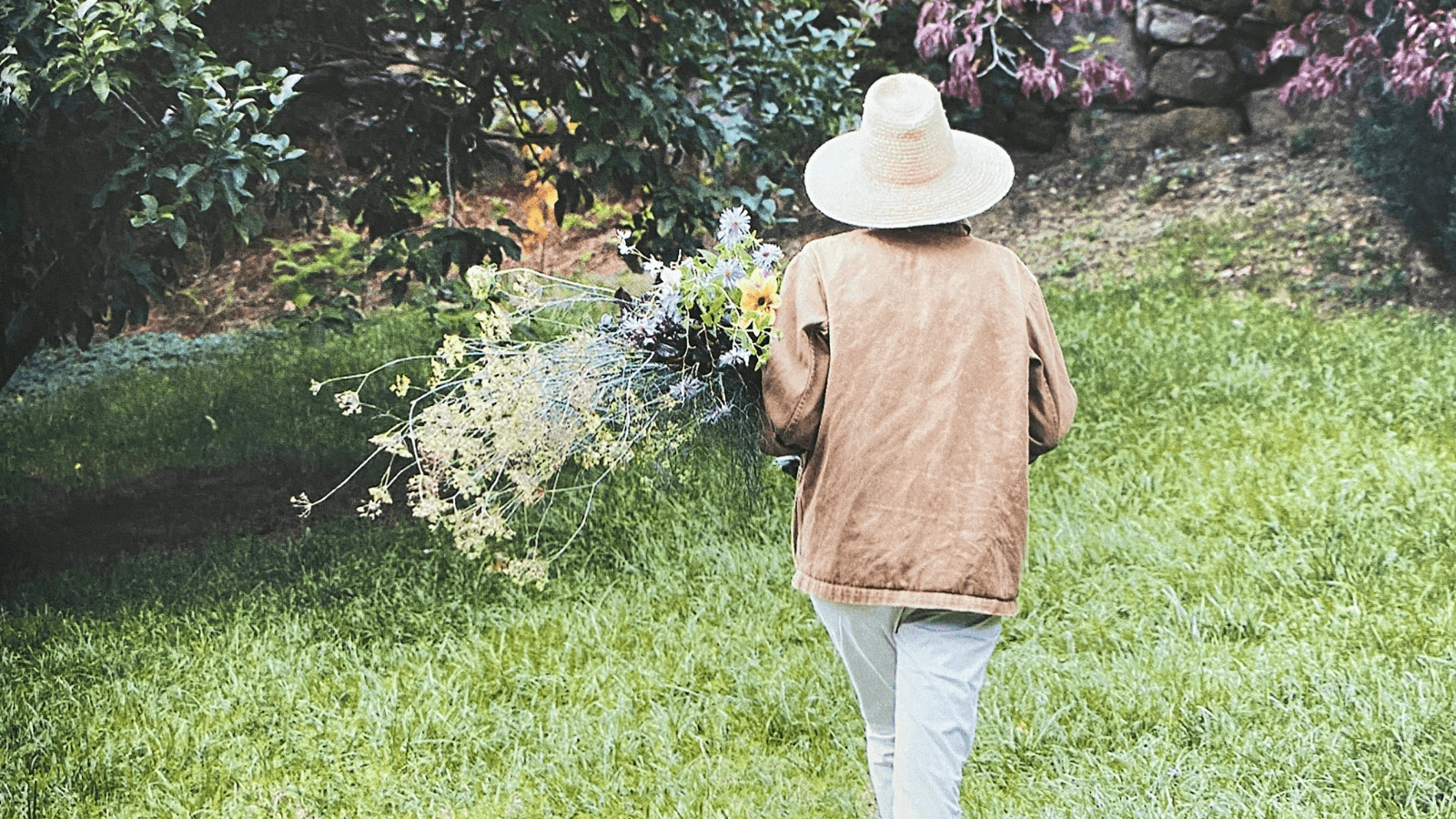
A garden needs a soul. For me, it must feel very much alive and breathing. It should be full of the sound of feeding insects and singing birds; it must have movement and not be too stiff; fragrance is important and the layering of texture and color. All seasons must be considered.
As alums are starting to plan their gardens for spring/summer 2026, do you have any advice for what to consider?
That's a tricky and a long one to answer, but I always start by asking my clients, “What would you like the maintenance of the garden to look like?” If you don't have the time to do the work yourself or the budget to hire help, you need to seriously consider this at the forefront. Gardens are not like buying furniture. They change, they need care, they are alive and they can be expensive if you're not careful and smart with your choices.
I’d also recommend making a list of your goals and considering, “How do I want to use and experience the space?”
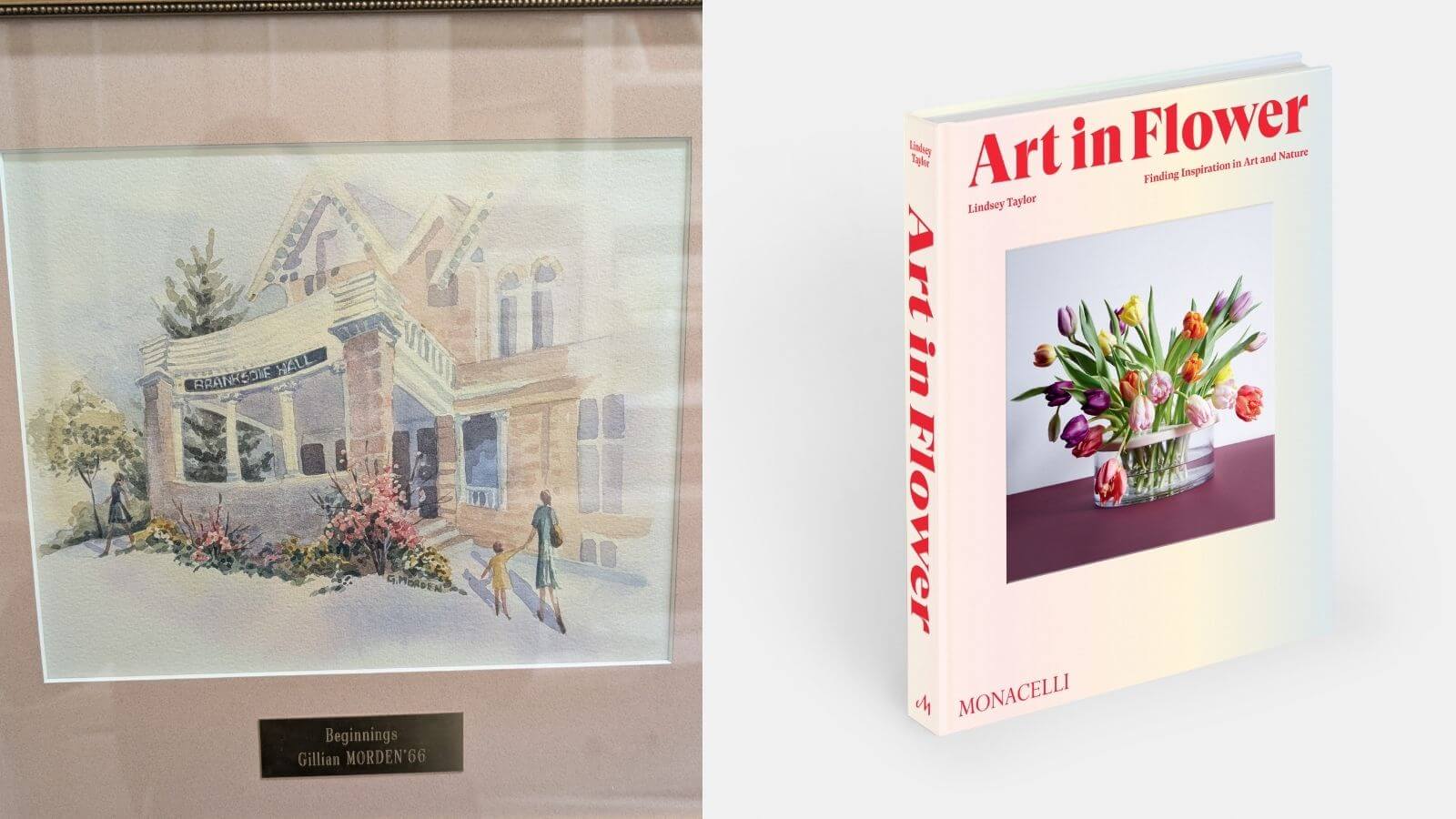
In your book, Art in Flower, you introduce readers to your process of creating flower designs inspired by works of art. Would you share with us what kind of arrangement you might make inspired by the piece above that hangs in the school?
This is a beautiful watercolour! It really reminds me of my time there. There's something very soft and playful about it. There's an innocence and whimsy. I might start with a creamy-coloured ceramic vessel. Maybe a pitcher made from ironstone?
I would want it to feel "old-school,” but also fresh and have lots of movement. I would like to use tawny-coloured ornamental grasses, some long stems of pink and buttery yellow flowers, like cosmos, or other wispy wildflower-like stems. It would be airy and proud.
Interested in more from Lindsey TAYLOR'86? Be sure to follow her on Instagram or check out her website.